


How a Chinese Backend Engineer Handled Coding Interviews in English
Strong engineers still stall when they have to think and speak English at the same time. He was a backend engineer in China. The gap was coding interviews - not the technical content.
What this case shows
Written English was fine. Spoken answers stalled. See how one Backend Engineer from China practised coding-interview answers out loud.
At a glance
| Role | Backend Engineer |
|---|---|
| Location | China |
| English challenge | coding interviews |
| Interview problem | Coding |
| Target | a Big Tech-style technical interview |
| Preparation | Live mocks with English feedback on the same answers |
| Outcome | Gained clearer, more confident English for interviews |
The Interview Problem
Strong engineers still stall when they have to think and speak English at the same time. He was a backend engineer in China. Day-to-day work used Java. In the room, coding interviews were what broke down.
What We Practised
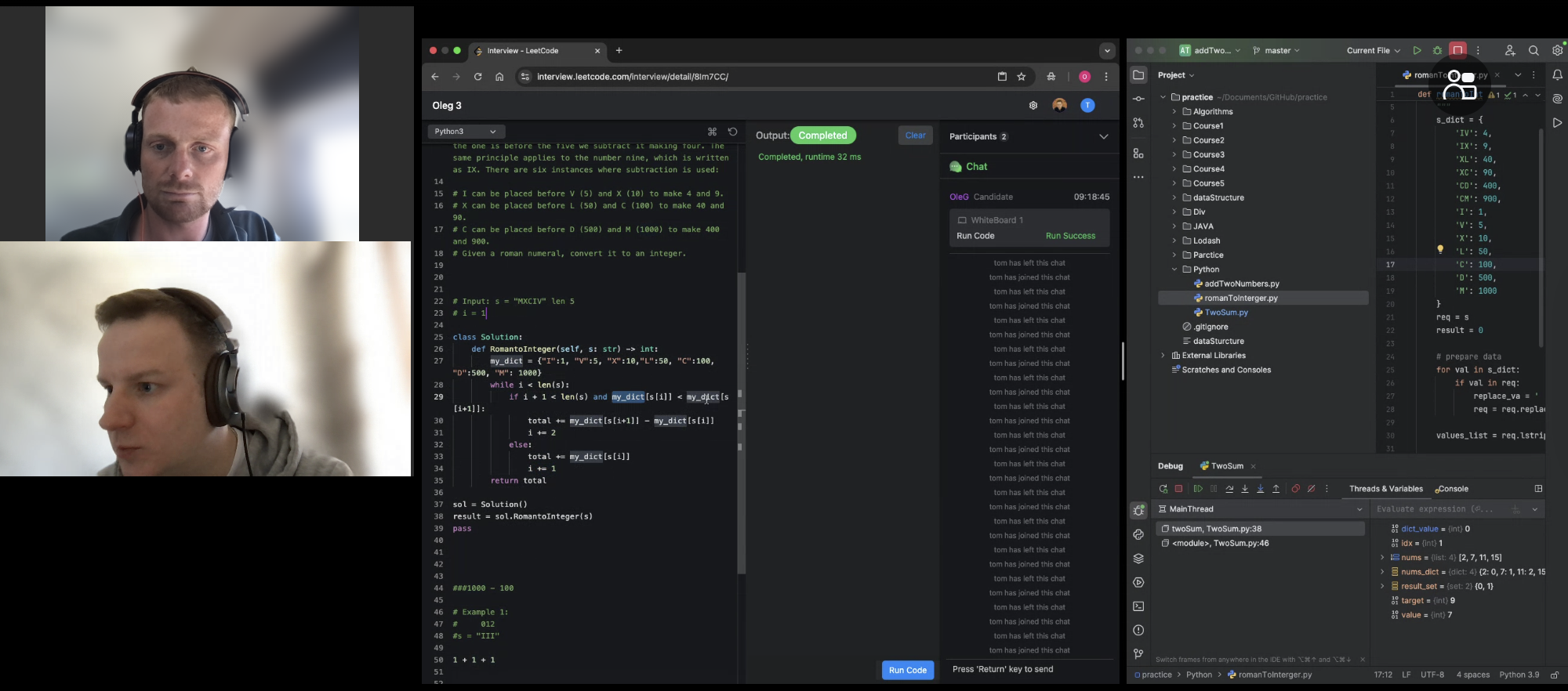
Practice matched the round he actually had to speak: coding interviews. Each mock interview included notes on the same answer - where he paused, which words were vague, and where the structure broke.
- Thought aloud in English: constraints, approach, then code.
- Practised explaining time and space complexity in complete sentences.
- Clarified the requirements in English before writing code.
- Used debugging language out loud when a test case failed.
Useful references along the way: What to expect in English interviews.
Why Coding Interviews Are Difficult in English
A coding interview scores how you think, not only the final function. You have to clarify the problem, talk through an approach, name complexity, and debug in English. Engineers who solve silently often fail the communication bar even when the code would work.
Preparing for a similar path? Read Interview-Ready English for a Backend Engineer From China.
What Changed
Gained clearer, more confident English for interviews. He could explain coding-interview explanations more clearly when questions got hard. That readiness was the goal - not a promised job offer.
What Other Engineers Can Learn
- Say the constraints and your approach before you write code.
- Practise complexity in English: time, space, and why you chose this structure.
- Narrate while you type. Silence is hard for the interviewer to score.
- Have a ready phrase for uncertainty, such as: I do not know yet - here is how I would check.
Practice this system-design mock
Try a locked preview of a Java system-design mock - with English prompts for each stage.
Sign up to unlock this exercise →Learning paths
Practise in the course
Start with your introOther engineers practising interview English

Mockly has helped me enormously in working toward my goals in Tech. Highly recommended.

Mockly has been the best investment I’ve made in the past year. The mentors don’t just have a deep knowledge of the language - they bring extensive experience in the IT industry. They understand the tech job market and are well-versed in modern engineering practices and the culture of top companies. Sessions aren’t just about improving your English; they’re an opportunity to sharpen your soft skills, gain valuable insights beyond engineering, and become a stronger communicator overall. Highly recommended.
Practise explaining your technical reasoning in English
No card required. Start with a 7-day free trial - a lesson, a mock interview, or both.
Join 500+ preparing for global roles
FAQ
Questions
More questions? Email us at contact@mocklyenglish.com.
Similar case studies
Interview-Ready English for a Backend Engineer From China
Written English was fine. Spoken answers stalled. See how one backend engineer from China practised system-design answers out loud.
How a Chinese Backend Engineer Built Interview-Ready English
A Chinese Backend Engineer knew the work. Live English - structured interview stories - was where interviews stalled. Here is the practice that changed the delivery.
More case studies
Related resources
Case studies are illustrative, based on patterns from real coaching sessions.