


How a German Backend Engineer Built Interview-Ready English
Interviewers are not grading your accent. They need to follow your reasoning in English. He was a backend engineer in Berlin. The gap was coding interviews - not the technical content.
What this case shows
Written English was fine. Spoken answers stalled. See how one Backend Engineer from Germany practised coding-interview answers out loud.
At a glance
| Role | Backend Engineer |
|---|---|
| Location | Berlin |
| English challenge | coding interviews |
| Interview problem | Coding |
| Target | a Big Tech-style technical interview |
| Preparation | Live mocks with English feedback on the same answers |
| Outcome | Gained clearer, more confident English for interviews |
Candidate Snapshot
He prepared for English-language interviews as a backend engineer. The stack was Kotlin. Written English was stronger than speaking under time pressure.
Why the Interviews Were Difficult
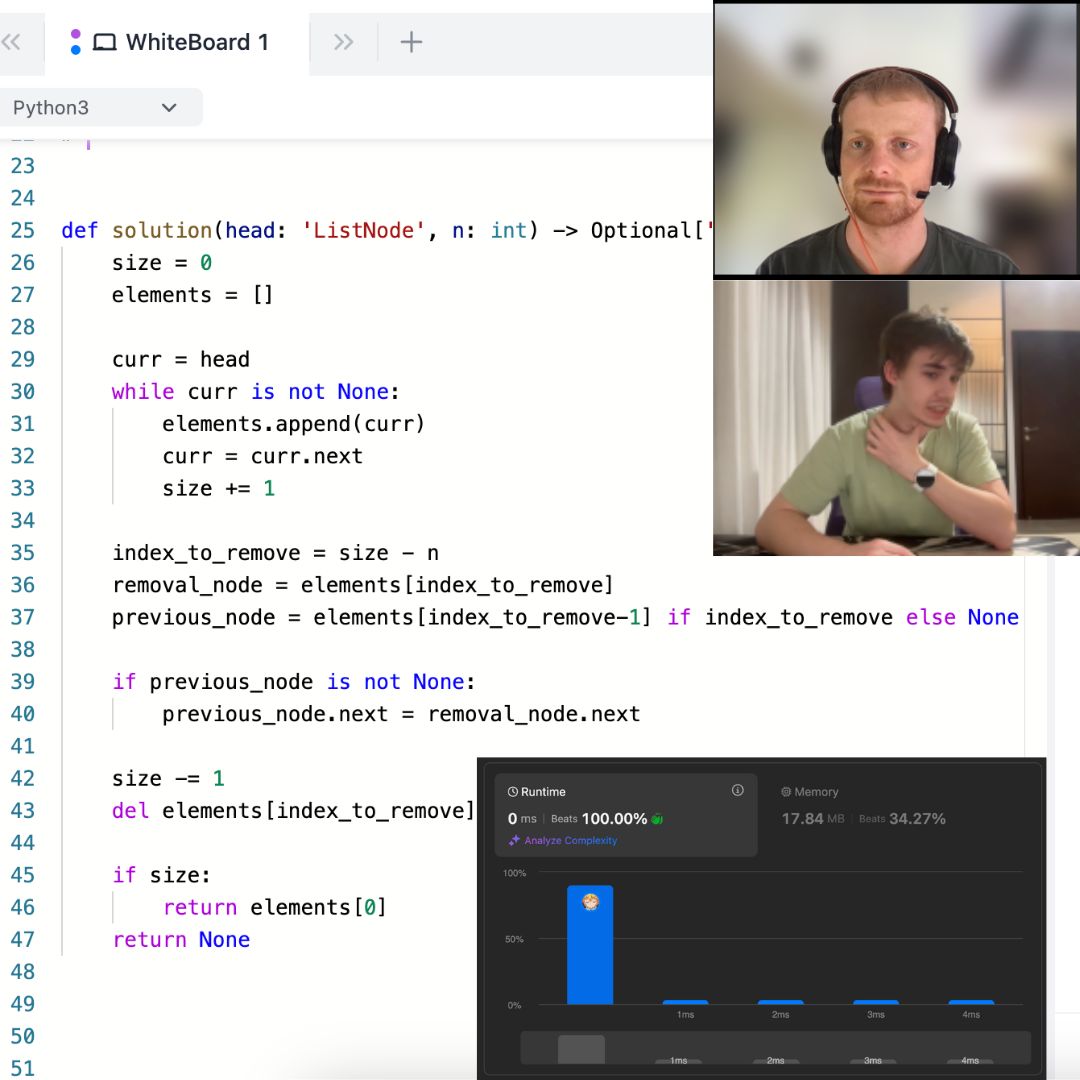
Interviewers are not grading your accent. They need to follow your reasoning in English. He was a backend engineer in Berlin. Day-to-day work used Kotlin. In the room, coding interviews were what broke down.
Interview Strategy
Practice matched the round he actually had to speak: coding interviews. Each mock interview included notes on the same answer - where he paused, which words were vague, and where the structure broke.
- Thought aloud in English: constraints, approach, then code.
- Practised explaining time and space complexity in complete sentences.
- Clarified the requirements in English before writing code.
- Used debugging language out loud when a test case failed.
Useful references along the way: What to expect in English interviews, Pronouncing numbers and metrics.
The Difference
Gained clearer, more confident English for interviews. He could explain coding-interview explanations more clearly when questions got hard. That readiness was the goal - not a promised job offer.
What to Practise
- Say the constraints and your approach before you write code.
- Practise complexity in English: time, space, and why you chose this structure.
- Narrate while you type. Silence is hard for the interviewer to score.
- Have a ready phrase for uncertainty, such as: I do not know yet - here is how I would check.
Why Coding Interviews Are Difficult in English
A coding interview scores how you think, not only the final function. You have to clarify the problem, talk through an approach, name complexity, and debug in English. Engineers who solve silently often fail the communication bar even when the code would work.
Preparing for a similar path? Read How a Backend Engineer From Germany Prepped for English Interviews.
Learning paths
Practise in the course
Start with your introPractise explaining your technical reasoning in English
No card required. Start with a 7-day free trial - a lesson, a mock interview, or both.
Join 500+ preparing for global roles
FAQ
Questions
More questions? Email us at contact@mocklyenglish.com.
Other engineers practising interview English

Mockly was a huge help in preparing for my interviews. We worked on both technical and behavioral questions, and I received great advice on how to approach them and what to focus on. I feel significantly more confident as a result. They also helped me with my CV and cover letter - showing me how to structure them properly and highlight my strengths. I appreciate that they always ask how you’d like to structure your sessions and adjust to your goals. It keeps you on track and makes the whole process far more effective.

I’ve had the pleasure of practicing English with Mockly and I truly appreciate the progress I’ve made. I highly recommend their services to professionals in tech and beyond. I particularly enjoy the teaching style and the philosophy behind it: “If you enjoy the process, you’ll get it.” The personalized learning plans make every session practical and useful. Their hands-on knowledge and genuine interest in the world of technology will genuinely boost your English skills.
Similar case studies
How a Backend Engineer From Germany Prepped for English Interviews
A backend engineer from Germany trained business English for interviews. Readiness - not a promised job - was the goal.
Yandex Interview Prep in English: A Backend Engineer Case Study
A German backend engineer was targeting Yandex. System-design answers in English were the gap. Here is what she practised.
More case studies
Related resources
Case studies are illustrative, based on patterns from real coaching sessions.